
biomechanics
Biomechanics
Biomechanics is the study of how the body moves as well as the forces that act upon it. More specifically in swimming the biomechanical principles are extremely important as they help athletes move through the water more efficiently while also minimizing resistance. We see Michael Phelps’ success was not only due to his physical fitness but also due to his ability to apply the biomechanical principles that help him maximize speed, efficiency and power.
Reducing Drag
Biomechanical Principle: Minimizing Resistance (drag)
Drag is essentially the force that opposes a swimmer’s movement through the water during training and competition. The more drag a swimmer experiences, the more energy they need to use to maintain speed. In all, successful swimmers need to aim to keep their bodies as streamlined as possible.
Application in Swimming
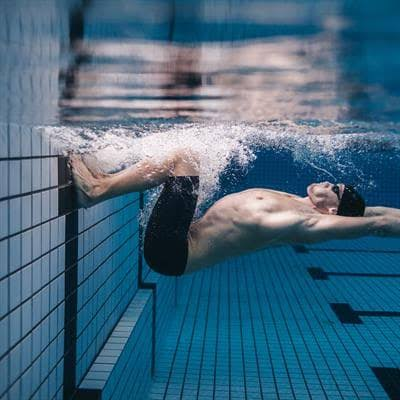
For application we see that Michael Phelps maintained a long, straight body position during his starts, turns and underwater phases of a race. He would keep his head aligned with his spine and reduce any unnecessary movements, this helped him to minimize water resistance and helped him to move more effectively through the water.
Importance
The reduction of drag allows swimmers to swim faster, conserve energy and maintain speed for longer periods of time. This principle was mainly important for Phelps’ during his underwater dolphin kicks, these were considered the best in the world among swimmers.
Propulsion and Newton’s Third Law
Biomechanical Principle: For every action, there is an equal and opposite reaction.
In Newton’s Third Law it is stated that when a swimmer pushes water backward, the water then pushes the swimmer forward with an equal force.
Application in Swimming
Phelps pulled water backward by the use of his arms during each stroke and pushed water backward with his legs during kicking movements. The stronger and more effective the push against the water, essentially the greater the forward movement.
Importance
Newton’s Third Law is responsible for generating propulsion and is essential for butterfly stroke, freestyle stroke as well as starts and turns. Michael Phelps' powerful pull phase has allowed him to generate exceptional forward movement.
Force Production
Biomechanical Principle: Greater force production leads to greater acceleration.
In accordance with Newton's Second Law, acceleration increases when a greater force is applied.
Application in Swimming
We can see Phelps generate great amounts of force through his powerful arm pulls, explosive starts from the block, strong dolphin kicks as well as forceful push-offs from the wall. His upper-body strength and core strength in all enabled him to produce more force than most of his competitors.
Importance
Overall, the greater force production resulted in faster starts, more powerful turns and higher swimming speeds.
Balance and Body Position
Biomechanical Principle: Maintaining the body’s center of mass in an efficient position.
The body's position while swimming greatly influences the athlete's performance. A prime example of this is if a swimmer’s leg drops too low in the water while they are swimming, this increases drag significantly.
Application in Swimming
To help his swimming performance Phelps maintained a horizontal body position by continuously engaging his core muscles and by keeping his hips as close to the water’s surface.
Importance
Proper balance and body position helps swimmers reduce drag, conserve energy and helps them to improve their stroke efficiency. Overall, Phelps' strong core strength helped him to maintain great body alignment throughout his races.
Angular Motion and Rotation
Biomechanical Principle: Repeated rotational movements increase efficiency and power.
This is important as many swimming strokes require controlled body rotation.
Application in Swimming
While swimming freestyle Phelps rotated his shoulders and hips around his body’s longitudinal axis. This rotation of the shoulders and hips allowed him to increase stroke length, reduce overall strain on the shoulders and generate greater force.
Importance
This principle is important as it helps with effective rotation to improve propulsion, help prevent injury and increase efficiency.
Impulse and Momentum
Biomechanical Principle: The impulse equals the force multiplied by the time over which the force is applied. Essentially the greater the impulse the greater momentum.
Application in Swimming
Phelps would apply force against the starting block at the start of a race as well as during turns for an optimal amount of time. This created maximum momentum as he entered the water.
Importance
Impulse and momentum helps to improve race starts, provides a competitive advantage over others as well as enhances turns overall for the athlete. As races are often determined by hundredths of a second, it is crucial to have efficient starts and turns.